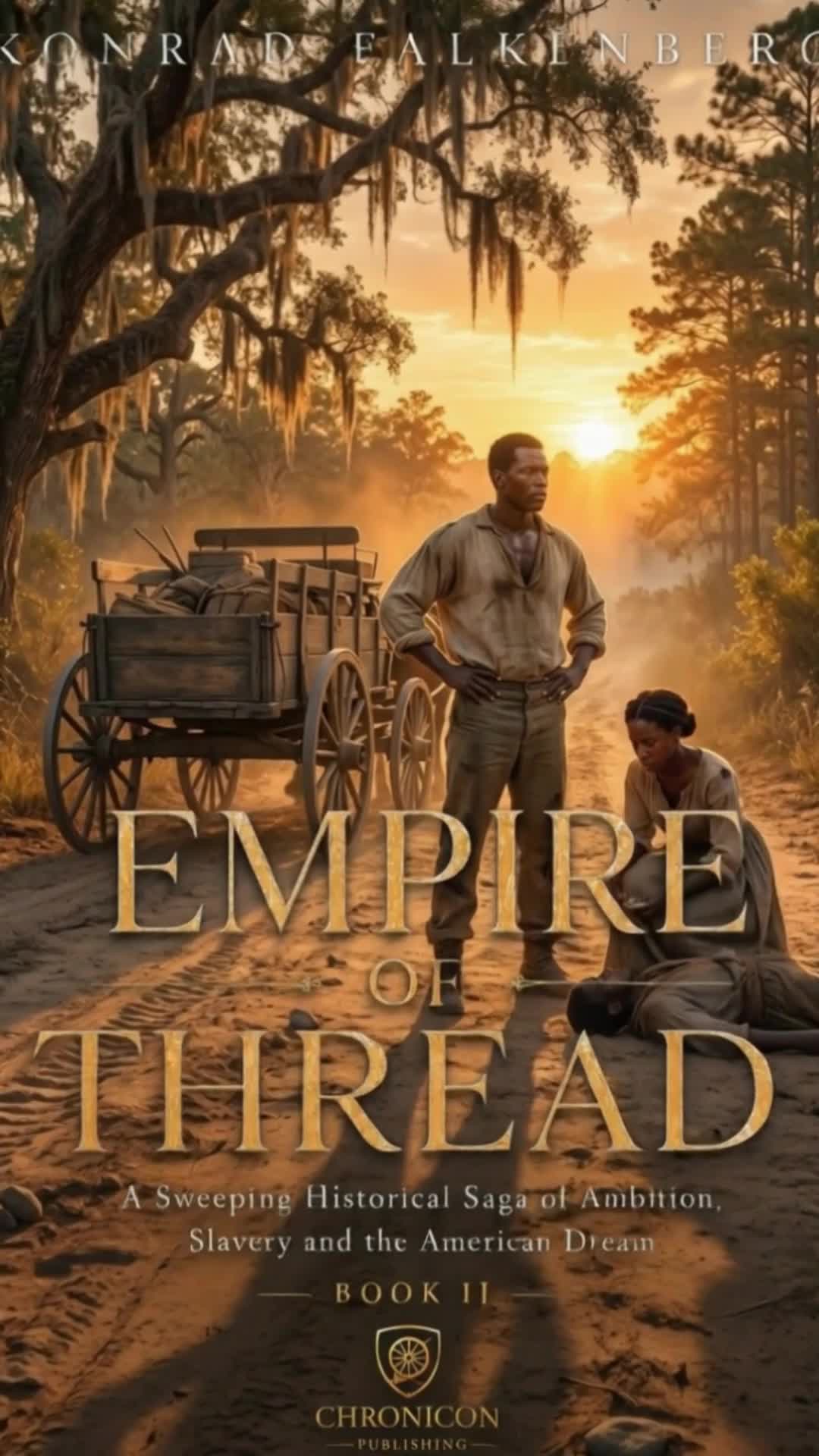
Empire of Thread Book II

In the American South, Felix Hasler enters a world shaped by cotton, wealth, forced labour, and ruthless ambition. The opportunities before him are greater than anything he could have imagined in Switzerland, but so are the moral dangers. The textile trade promises advancement, influence, and independence, yet its success is inseparably linked to a system built on exploitation and human suffering.
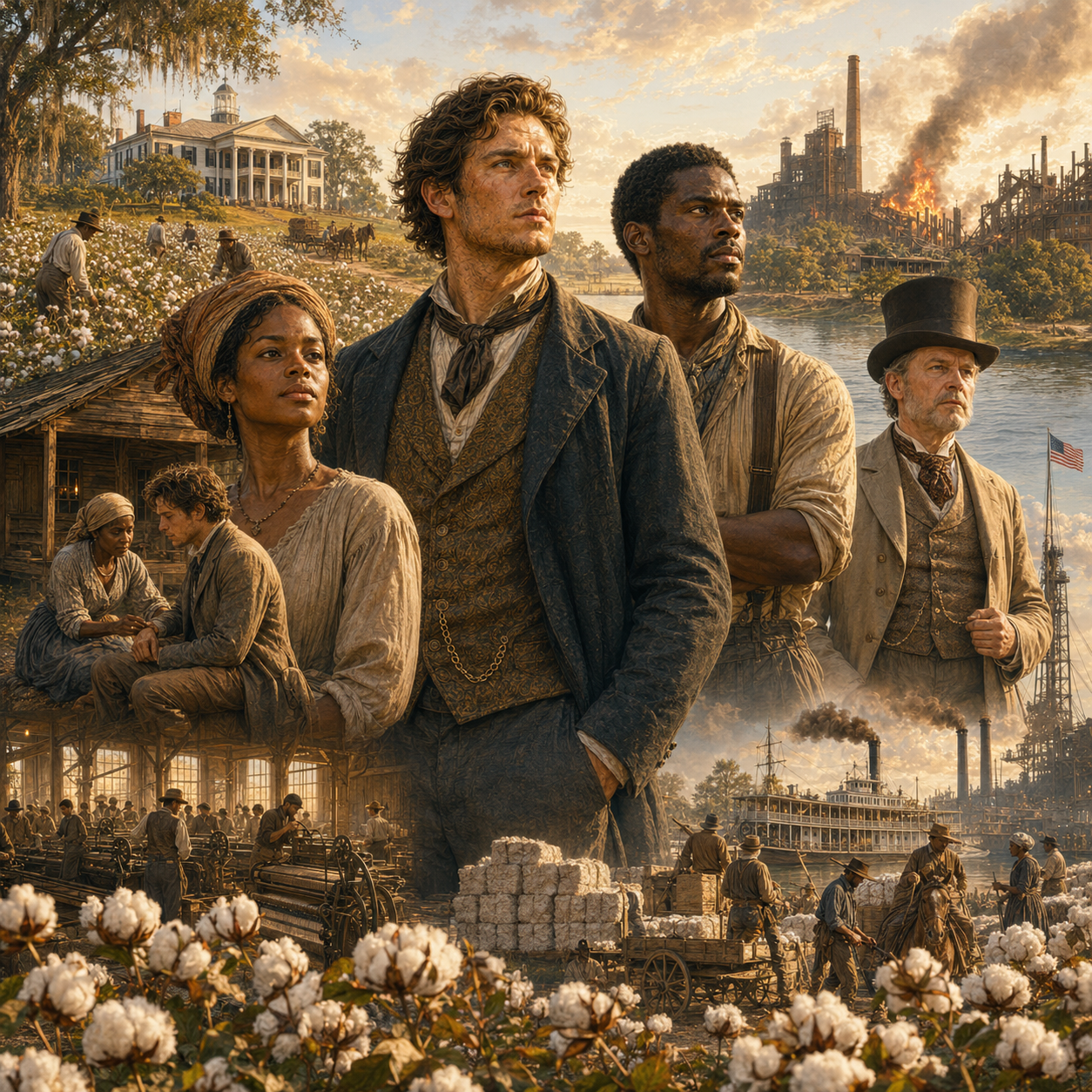
After Yela and Kwame save his life, Felix begins to see this world differently. Their courage, loyalty, and personal histories force him to confront realities he can no longer ignore. He understands that the cotton feeding the mills and markets is not simply a commodity. It carries the weight of violence, dependence, and lives controlled by others. The further Felix advances, the more difficult it becomes to separate economic opportunity from the injustice on which that opportunity rests.
Determined to build something of his own, Felix persuades plantation owner Fuller to invest in a textile factory. The project offers the chance to create new markets, challenge established interests, and transform the balance of power within the industry. For the first time, Felix appears to be moving beyond survival. He is no longer merely reacting to the decisions of others. He is beginning to shape events himself.
But success brings new enemies. Greed, rivalry, manipulation, and growing resistance threaten the factory before it can secure its future. Business partners pursue their own interests, powerful men defend their privileges, and every decision carries consequences for those who have the least influence. Felix must learn whom he can trust, how far he is willing to compromise, and whether power can ever be used without becoming corrupting in its own right.
At the same time, the struggle in Switzerland continues. Elisabeth and Lisbeth stand against Alfred Gemperle and the system that keeps home workers dependent and poor. Their resistance grows more dangerous as Gemperle tightens his control over labour, wages, and livelihoods. While Felix fights for influence in America, the people he left behind are still trapped in the same structures that shaped his childhood.The distance between the two worlds begins to narrow. Decisions made in factories, counting houses, plantations, and village homes become part of the same struggle over labour, dignity, and survival. Felix’s rise gives him new possibilities, but it also places him closer to the very forces he once resisted.
Empire of Thread – Book Two continues the sweeping historical trilogy with a story of industrial expansion, slavery, loyalty, betrayal, and the price of ambition. As Felix moves closer to success, he must decide whether prosperity can ever justify the suffering demanded by those who control wealth and power.